
 admin
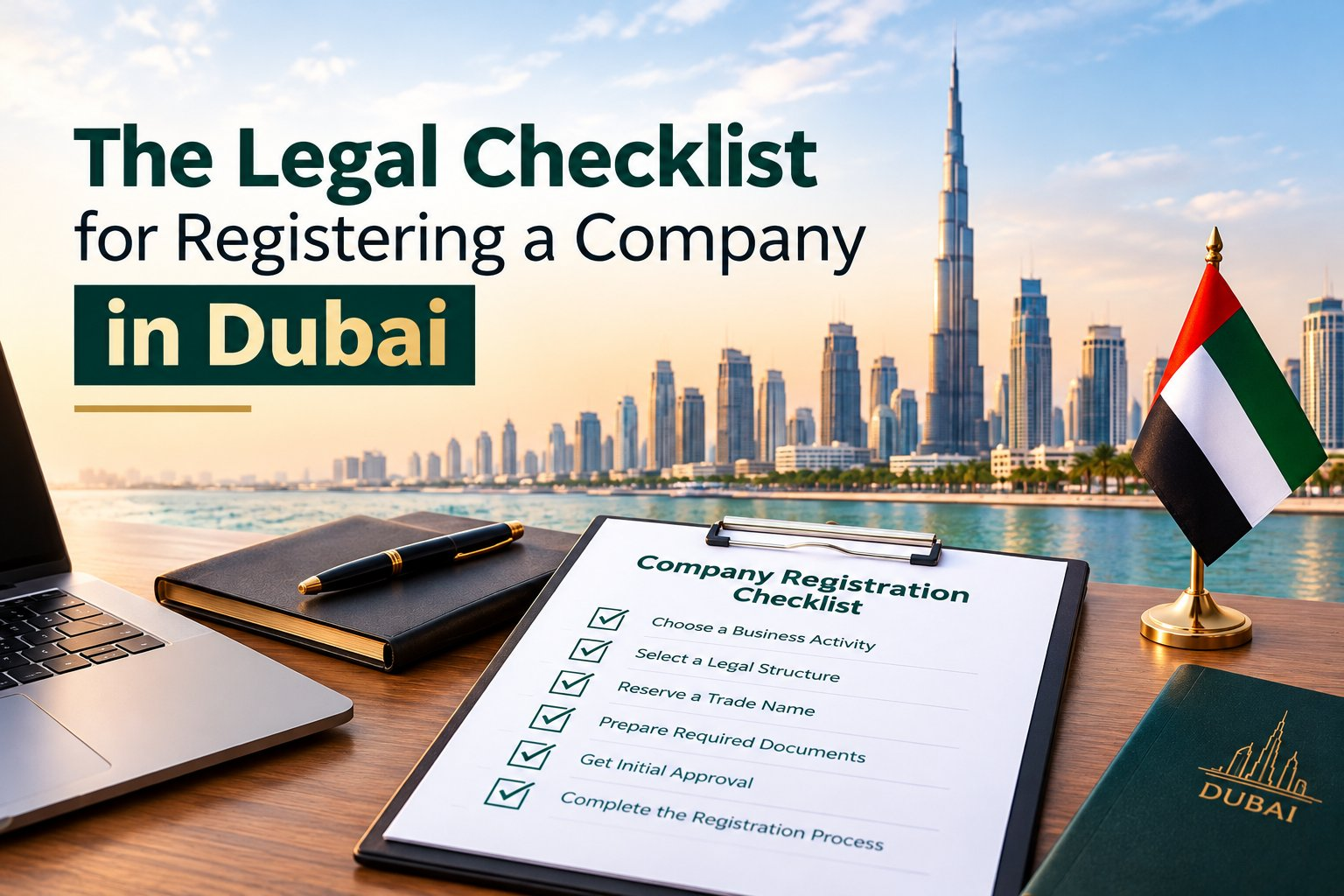
adminDubai recorded over 71,000 new company registrations in 2024. That number keeps rising. But many first-time founders hit delays because they miss a key document or skip a legal step. When you decide to register a business in Dubai, getting the legal side right from the start saves you time and money. This guide gives you a clear, step-by-step checklist to follow.
Why Legal Compliance Matters Before You Open
Many people focus on choosing a company name or picking an office. The legal steps, however, come first. Missing even one document can delay your trade license by weeks. It can also lead to fines.
For example, the UAE imposes an AED 10,000 fine for late corporate tax registration. Trade license renewal delays can cost AED 250 to AED 500 per month. Anti-money laundering (AML) violations can result in fines of up to AED 5 million. These are avoidable costs, if you follow the right checklist from the start.
Step 1: Choose Your Business Structure and Jurisdiction
Before you gather any documents, you need to pick where and how you will register a business in Dubai. Your choice affects your documents, your costs, and your legal obligations.
There are three main options:
| Structure | Who It Suits | Key Legal Point |
| Mainland (DED) | Businesses trading in UAE market | Needs a physical office with Ejari lease |
| Free Zone | Import/export, tech, media, freelancers | Zone authority issues the license |
| Offshore (JAFZA / RAK ICC) | Holding companies, asset protection | Cannot trade inside UAE directly |
Pick the wrong structure and you may need to re-register later. That costs extra time and money. Getting this right is the first legal checkpoint.
Step 2: Gather Your Personal and Shareholder Documents
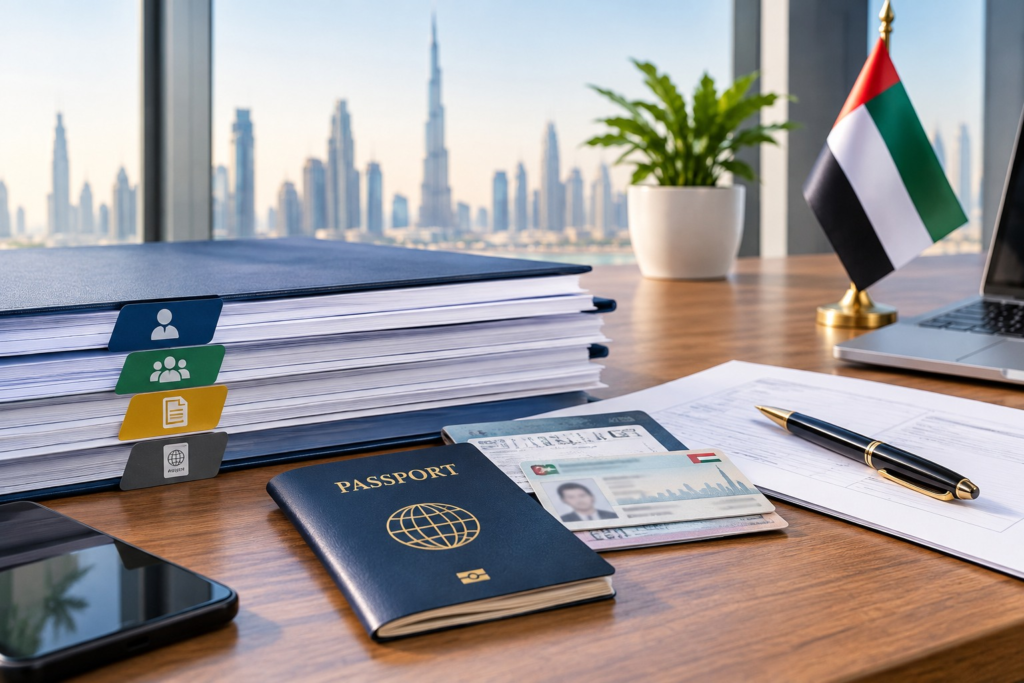
Whether you are the only owner or you have partners, every shareholder must provide certain personal documents. These prove who you are and where you live. Missing even one can stop your application.
Required Personal Documents for All Shareholders
Here is what each shareholder must submit:
- A valid passport copy with at least six months of remaining validity
- A UAE entry stamp or valid UAE visa copy (if you are already in the country)
- Emirates ID copy (for UAE residents only)
- Proof of home address; a utility bill or bank statement dated within the last three months
- Two recent passport-size photographs
If you have a corporate shareholder, meaning a company holds shares in your new business, you will also need that company’s Certificate of Incorporation, Memorandum and Articles of Association, and a Board Resolution authorising the investment.
Step 3: Prepare Your Company-Specific Legal Documents
Once personal documents are ready, you move to company-specific paperwork. These vary slightly by structure, mainland or free zone, but the core set is largely the same.
Trade Name Reservation
You must reserve your company name with the Department of Economy and Tourism (DET, formerly DED). You submit three to five name options. The DET checks that the name is not already taken, does not violate public morals, and follows UAE naming rules (no religious references, no country names without approval).
A trade name reservation is valid for six months. If you do not complete registration within that window, you must reapply.
Initial Approval Certificate
After the name is reserved, you apply for Initial Approval. This is the government confirming that your planned business activity is permitted. It is not a license, it is permission to proceed. Some activities need extra ministry approvals before the DET gives initial approval.
Memorandum of Association (MOA)
The MOA is a key legal document. It outlines your company’s purpose, the shareholding split between partners, and how the business will be managed. For mainland companies, the MOA must be notarised by a Notary Public at Dubai Courts. Free zone companies sign a zone-specific constitutional document instead.
Make sure all shareholders review the MOA before signing. Errors here can cause disputes later.
Office Lease Agreement
Every mainland company must have a physical office. This lease must be registered on the Ejari portal run by the Dubai Land Department. Virtual office addresses are not accepted for mainland trade licenses.
Free zone companies can use a flexi-desk arrangement provided by the zone authority. This is more affordable and does not require a separate Ejari registration.
Quick Reference: Documents by Structure
| Document | Mainland / Free Zone |
| Passport copy (6-month validity) | Both |
| Proof of residential address | Both |
| Trade name reservation certificate | Both |
| Initial approval from DET | Mainland only |
| Notarised MOA (Dubai Courts) | Mainland only |
| Zone constitutional document | Free Zone only |
| Ejari-registered office lease | Mainland only |
| Flexi-desk agreement from zone | Free Zone only |
| Specimen signatures of shareholders | Both |
| Business plan (for certain activities) | Both (as needed) |
| Bank reference letter | Both (offshore required) |
Step 4: Get Any Required Regulatory Approvals
Some business activities need clearance from a specific government body before the DET issues your trade license. This step is often missed by first-time founders, and it causes the most delays.
Activities That Need Extra Approval
Below are common examples. If your activity is regulated, check with the relevant authority early:
- Healthcare businesses: Dubai Health Authority (DHA) approval required
- Food and restaurant businesses: Dubai Municipality food safety clearance required
- Financial services: Dubai Financial Services Authority (DFSA) or SCA approval required
- Educational institutions: Knowledge and Human Development Authority (KHDA) approval required
- Security companies: Dubai Police clearance required
- Real estate companies: RERA registration required
Getting these approvals can take two to six weeks. Plan for this time in your timeline. Experienced business setup consultants in Dubai will know exactly which approvals apply to your specific activity, a step many owners get wrong on their own.
Step 5: Attest Your Foreign Documents
If any of your documents were issued outside the UAE, they must go through an official attestation process before the UAE government will accept them. This is a chain of verifications that confirms the document is genuine.
The Standard Attestation Chain
For most countries, the process works like this:
- Step 1: Get the document notarised by a registered notary in your home country
- Step 2: Have your home country’s Ministry of Foreign Affairs stamp it
- Step 3: Take it to the UAE Embassy in your home country for authentication
- Step 4: Submit it to the UAE Ministry of Foreign Affairs (MOFA) for final attestation inside the UAE
If your country has signed the Hague Apostille Convention, the process is simpler. You get one apostille stamp in your home country, then bring the document to UAE MOFA for the final step.
All non-Arabic documents must also be translated into Arabic by a UAE-certified legal translator. The translation must accompany the original.
Allow two to four weeks for the full attestation chain. If you are in a hurry, professional business setup consultants in Dubai can manage this process for you.
Step 6: Submit Your Application and Get Your Trade License
Once all documents are ready and approvals are in place, you submit your full application to the DET (for mainland) or the free zone authority. Processing takes three to fourteen working days for a complete application.
Your trade license will specify your company name, business activity, and license type. Keep this document safe. It is your legal permission to operate in Dubai.
Types of Trade Licenses in Dubai
| License Type | Covers | Issued By |
| Commercial License | Trading, retail, import/export | DET |
| Professional License | Consulting, IT, media, education | DET or Free Zone |
| Industrial License | Manufacturing, production | DET + Ministry of Industry |
| Tourism License | Hotels, travel agencies | Dubai Tourism (DTCM) |
Step 7: Meet Your Post-Registration Legal Obligations

Getting a trade license is not the end. Once you register a business in Dubai, you take on ongoing legal duties. Skipping these leads to fines and can put your license at risk.
Corporate Tax Registration
As of June 2023, the UAE charges a 9% corporate tax on taxable income above AED 375,000. All UAE companies must register with the Federal Tax Authority (FTA). Late registration carries a fine of AED 10,000. Register within the deadline set by the FTA, typically within nine months of your financial year end.
VAT Registration
If your annual revenue exceeds AED 375,000, you must register for VAT. Late VAT registration also carries an AED 10,000 fine. Keep clean accounting records from day one; not just from when you cross the threshold.
Ultimate Beneficial Owner (UBO) Disclosure
All UAE companies must register their Ultimate Beneficial Owners with the relevant authority. A UBO is anyone who directly or indirectly owns more than 25% of the company. Non-compliance can result in fines of up to AED 100,000 and license cancellation.
Annual License Renewal
Trade licenses in Dubai must be renewed every year. Late renewal costs AED 250 to AED 500 per month. If a license lapses for too long, it can be cancelled, and you would need to go through the full registration process again.
Common Legal Mistakes When You Register a Business in Dubai
Knowing what to do is important. Knowing what not to do is equally valuable. Here are the mistakes that cost people the most time and money:
| Mistake | Consequence |
| Submitting documents with less than 6 months passport validity | Application rejected; must resubmit |
| Skipping regulatory approvals for controlled activities | License not issued until resolved |
| Using a non-Ejari-registered lease for mainland setup | DET rejects the application |
| Missing UBO disclosure filing deadline | Fine up to AED 100,000 |
| Forgetting corporate tax registration | AED 10,000 penalty |
| Letting trade license expire before renewal | AED 250–500 per month fine |
Working With Business Setup Consultants in Dubai
The legal checklist to register a business in Dubai is manageable, but it has many moving parts. One missed document or one wrong approval can push your launch back by weeks.
That is why many founders choose to work with professional business setup consultants in Dubai. They know which approvals each activity needs, how to handle attestation, and how to avoid the most common filing mistakes.
A good consultant does not just file paperwork. They check for compliance gaps, guide you on the right structure, and make sure your business opens on solid legal ground.
Get Expert Help From Socialite Consultancy Services
Ready to register a business in Dubai, but want to make sure you get it right the first time? Socialite Consultancy Services has helped hundreds of founders move from checklist to licensed business without the stress.
Their team handles every step: document collection, attestation, regulatory approvals, trade license filing, and post-registration compliance. You focus on your business. They handle the legal work.
Contact Socialite Consultancy Services today and get your company registered correctly, quickly, and fully compliant.
Frequently Asked Questions
1. How long does it take to register a business in Dubai?
For a standard application with all documents ready, it takes three to fourteen working days. Add two to four weeks if foreign documents need attestation. Activities requiring extra ministry approvals may take longer.
2. Do I need a physical office to register a mainland company in Dubai?
Yes. Every mainland company must have a real office with a valid Ejari-registered lease. Virtual addresses are not accepted by the Department of Economy and Tourism for mainland trade license applications.
3. What happens if I register my business under the wrong activity?
You will need to amend your trade license, which involves extra paperwork and fees. In some cases, operating under the wrong activity can also lead to fines. Always confirm your exact activity with the DET before applying.
4. Are there penalties if I forget to renew my trade license?
Yes. Late renewal attracts a fine of AED 250 to AED 500 per month. If the license lapses for too long, authorities can cancel it. Reinstatement may then require a fresh registration process with all associated costs.
5. Can a foreigner own 100% of a company when they register a business in Dubai?
Yes, in most cases. The UAE Companies Law 2021 allows 100% foreign ownership for most business activities on the mainland. A few restricted sectors still require a UAE national partner. Free zones have always allowed full foreign ownership.